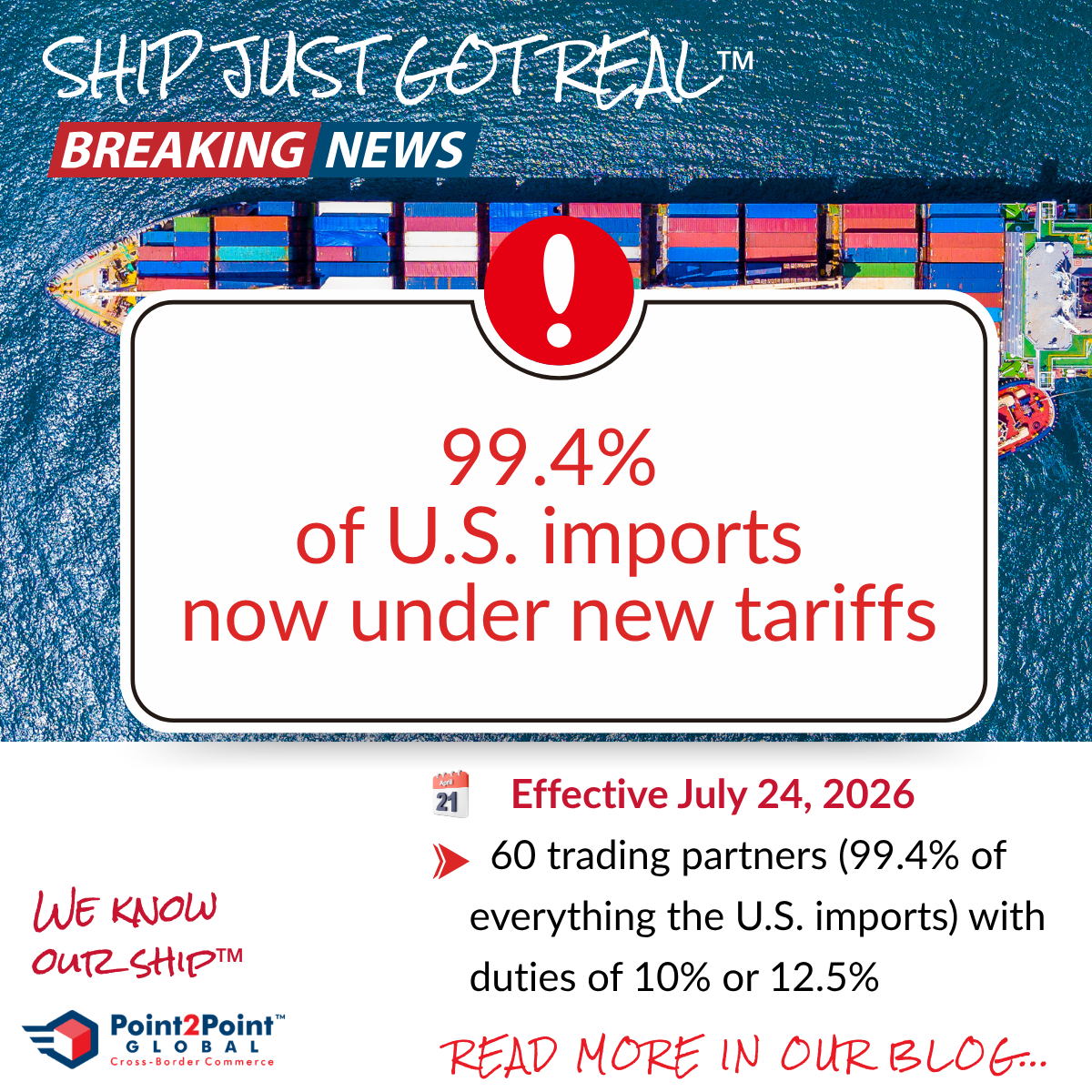
If you blinked, you might have missed it: the 10% “temporary” global tariff that’s been sitting on nearly every import since February, expired at 12:01 a.m. ET on July 24, 2026. But it didn’t just disappear — it got replaced, same-day, by something with a lot more staying power.
Ship happens, y’all. And this time it’s got a new name: Section 301.
From Section 122 to Section 301 — same effect, sturdier foundation
Quick refresher on how we got here. After the Supreme Court struck down the administration’s IEEPA tariffs back in February, the White House pivoted to Section 122 of the Trade Act of 1974 — a stopgap authority good for a maximum of 150 days. That clock ran out July 24.
Rather than let the tariff wall come down, the administration rebuilt it on a different foundation: Section 301, the same statute that’s already survived its share of court fights. This time, USTR did the legwork the earlier rounds skipped: a formal investigation launched in March, hearings in April and July, consultations with more than 45 governments, and over 1,600 public comments before the final rule dropped.
The justification: USTR says 60 trading partners, representing roughly 99.4% of everything the U.S. imports, aren’t adequately enforcing bans on goods made with forced labor. That’s the legal hook. The practical result looks a lot like the tariff regime it replaced — just built to last longer.
What the rates actually look like
Here’s where it gets specific, and where you’ll want to check your own product list line by line rather than assume:
10% additional tariff applies to goods from Argentina, Bangladesh, Cambodia, Canada, Ecuador, El Salvador, Guatemala, Honduras, India, Indonesia, Jordan, Malaysia, Mexico, Pakistan, Sri Lanka, Trinidad and Tobago, and the United Kingdom — countries that have some form of forced-labor import prohibition already in place or committed to one.
12.5% additional tariff applies to most of the other economies swept into the investigation.
The EU and Taiwan get a different math problem entirely: their combined MFN tariff plus the Section 301 duty generally won’t exceed 10%. If the existing tariff already meets or beats that number, no additional duty applies.
Japan, Korea, and Switzerland get the same treatment, but with a 12.5% ceiling instead of 10%.
Effective date: goods entered for consumption on or after 12:01 a.m. ET, July 24, 2026.
The exemptions matter as much as the headline rate
This is not a blanket tax on every box crossing the border, and treating it like one could cost you money. The exemption annexes carve out:
- Products already covered under Section 232 measures — steel, aluminum, autos, auto parts, copper
- Qualifying USMCA-compliant goods from Canada and Mexico
- A long list of raw materials, energy products (oil, gas), fertilizer, and agricultural goods
Whether your product falls into one of these buckets comes down to the HTSUS subheading, not the country of origin alone. Two nearly identical products from the same supplier could land on opposite sides of that line.
One more thing on the horizon: tariff-rate quotas for textile and apparel imports from Bangladesh, Cambodia, Indonesia, and Malaysia are coming, designed to reward countries that source cotton and textile inputs from the U.S. USTR is targeting September 1, 2026 for implementation, until then, those goods stay under the standard 10% rate.
And yes, it’s already in court
Within days of the announcement, two lawsuits landed at the Court of International Trade. One, filed by a spice importer and a watch retailer as a proposed class action, argues USTR can’t justify near-uniform tariffs across 60 countries with wildly different enforcement records under a statute meant for targeted, country-specific action. The other, filed in part by veterans of the earlier IEEPA challenges, calls the forced-labor rationale a pretext for reimposing tariffs the Supreme Court already struck down once.
Neither case pauses the tariffs while it’s pending. But if you’re an importer, it’s worth tracking: a successful challenge could affect scope, validity, or duration down the line, and there may be refund implications if that happens.
What to do right now
We know our ship, and here’s ours: sitting still isn’t a strategy when the rules change this fast. If you’re moving freight into the U.S., this week’s to-do list should include:
- Confirm your rate. Check the country-specific tariff and HTSUS classification for every SKU — don’t assume a country-wide rate applies uniformly.
- Audit goods in transit. If anything was loaded before July 24, find out if it qualifies for transition relief, and keep the paperwork to prove it.
- Update your numbers. Landed cost calculations, customs broker instructions, and bonding obligations should all reflect the new duties now, not after your next shipment clears.
- Revisit your contracts. Tariff allocation, price-adjustment, and change-in-law clauses are worth a second read if you haven’t touched them since February.
- Watch for what’s next. USTR already has a separate investigation open into 16 countries — 70% of U.S. imports — over industrial overcapacity. This isn’t likely to be the last change this year.
This is exactly the kind of shift where a logistics partner who’s already elbow-deep in the regulations pays for itself. If you’re not sure where your shipments land under the new rules, that’s a conversation worth having before your next container leaves port — not after it arrives with a bill you didn’t budget for.
Not the same old ship. Let’s talk about what this means for your supply chain, reach out to the Point2Point Global team today 📩 Let’s shoot the ship™