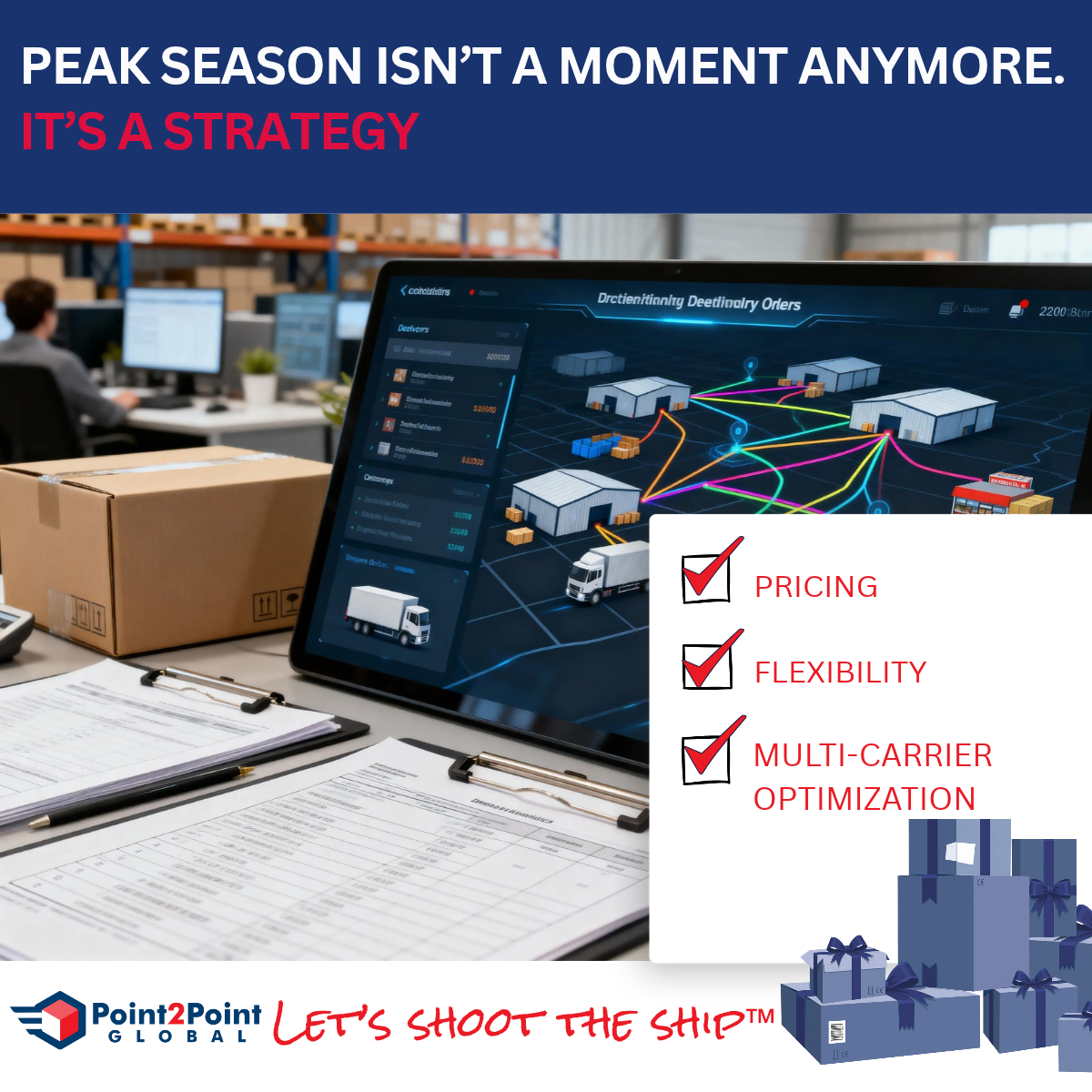
Peak season used to mean preparing for a handful of major shopping days: Black Friday, Cyber Monday, and the final rush before Christmas. But eCommerce has changed and the 2025 holiday season reinforced a new reality: peak is getting longer, shipping networks are becoming more fragmented, and the cost of moving a package is putting even more pressure on margins.
For brands and retailers, success isn’t just about getting packages out the door. It’s about having the flexibility to adapt as demand shifts, carrier performance varies, and costs change. That’s where a smarter shipping strategy makes all the difference. You need a strategy that is Not the same old ship™
Peak Season Is Spreading Out
Adobe’s online sales data showed that the number of days with at least $4 billion in online sales increased to 25 in 2025, up from 18 in 2024. While online sales don’t directly measure parcel volume, the trend points to a longer, more distributed period of consumer demand.
Parcel activity tells a similar story. During December 1–7, daily parcel volumes reportedly exceeded 100 million, running approximately 30% above off-peak levels.
The takeaway? Shipping operations can’t be built around just two or three high-volume days anymore.
Demand can surge across multiple weeks, putting pressure on capacity, delivery promises, fulfillment operations, and shipping budgets. A strategy that works at the beginning of the season may not be the best fit a few weeks later. Shippers need flexibility that lasts throughout the season, not just a plan for the peak.
That means being able to evaluate carrier options, adjust shipping strategies, and balance pricing and delivery speed as conditions change.
More Carriers. More Choices. More Complexity.
The carrier landscape is evolving, too.
Major carriers, including FedEx, UPS, and USPS, reported strong holiday on-time performance in 2025, with ShipMatrix figures in the 97%–99% range. At the same time, Amazon, Walmart, and regional carriers are becoming increasingly important parts of the delivery ecosystem.
One important caveat: ShipMatrix’s holiday methodology gives ground shipments an additional day in its delivery calculations. That distinction matters when interpreting on-time performance against the delivery promises customers actually experience.
For shippers, the bigger story is the growing number of available options and the complexity of managing them.
Adding another carrier may create new opportunities, but more options don’t automatically translate into better results. Each carrier has different service capabilities, pricing structures, coverage, and operating considerations. The challenge is knowing which option makes the most sense for a particular shipment, destination, and business objective.
At P2P, we know that having access to multiple carriers is only part of the equation. Anybody can talk to lots of parcel carriers. The challenge is knowing how to best utilize them 365 days a year.
That’s why P2P is changing the way ship gets done. P2P takes a multi-carrier approach, combining logistics expertise, technology, and data-driven decision-making to help businesses manage shipping as a connected strategy, not a collection of separate carrier relationships.
The Real Challenge for 2026: Controlling Shipping Costs
Strong delivery performance is important, but it doesn’t tell the whole story. A package can arrive on time and still cost more to ship than anticipated. And when thousands or millions of orders move through an eCommerce operation, small increases can have a significant effect on profitability.
Temporary peak-season pricing, carrier surcharges, service-level differences, and changing shipping volumes all influence the cost of getting products to customers. As businesses plan for 2026, understanding those variables before peak arrives is critical.
The answer isn’t necessarily to choose the cheapest carrier or move every package to a different service. A lower upfront rate may not be the best overall choice if it compromises delivery speed, coverage, or the customer experience.
Instead, shippers need to understand the relationship between price, speed, service, and flexibility.
That means evaluating shipping patterns, understanding where costs are increasing, and identifying opportunities to route shipments more strategically. It also means having the ability to adapt when carrier pricing or business needs change.
P2P’s Logistics-as-a-Service (LaaS) approach helps businesses bring these considerations together. By combining carrier options, operational expertise, and technology-enabled optimization, P2P helps shippers make more informed decisions about how their products move.
Because shipping more efficiently isn’t just about finding a better rate. It’s about building a strategy that works for your business throughout the year.
Your Shipping Strategy Needs a Control Layer
When demand shifts, rates change, and multiple carriers are involved, managing logistics through disconnected decisions becomes increasingly difficult. P2P helps bridge that gap by serving as an intelligent control layer within the eCommerce supply chain. Think of it as the layer that helps connect business priorities with operational execution, bringing together shipping rules, carrier options, workflows, and data to support more consistent, informed decisions.
Rather than treating every shipment as an isolated transaction, a smarter approach considers the bigger picture:
- Pricing optimization: Evaluate carrier and service options to help manage shipping costs.
- Flexibility: Adapt to changing demand, shipping destinations, and operational requirements.
- Carrier management: Make informed decisions across a multi-carrier network instead of relying on a one-size-fits-all approach.
- Visibility and insight: Use data to understand shipping performance, identify opportunities, and make better decisions.
- Scalability: Build a strategy that can respond to extended peak periods and changing business needs.
The goal is not simply to move packages. It’s to help businesses manage the complexity behind every delivery while balancing cost, speed, and the customer experience.
Don’t Forget What Happens After the Holidays
Peak planning shouldn’t end when the last holiday gift is delivered. Returns remain another consideration for eCommerce businesses navigating the post-holiday period. While overall returns declined slightly in 2025, returns activity increased in the days following Christmas, with a meaningful share arriving during the final six days of December.
That creates another operational challenge: businesses must manage the transition from outbound holiday volume to post-holiday activity without losing sight of costs, capacity, and customer expectations. For shippers, understanding the full seasonal demand pattern helps inform staffing, forecasting, inventory planning, and shipping decisions. The broader lesson is simple: a successful peak-season strategy looks beyond the busiest shopping days.
A Smarter Way to Ship—All Year Long
The 2025 holiday season reinforced what eCommerce businesses can no longer afford to ignore: peak season is more extended, the carrier landscape is more complex, and cost management requires more than negotiating a rate and hoping for the best.
The businesses best positioned to navigate these challenges will be the ones that can adapt—using multiple carrier options, better data, and a flexible strategy that supports their goals. P2P helps make that possible through Logistics-as-a-Service, combining technology, logistics expertise, and carrier management to help businesses optimize how they ship.
Because when it comes to eCommerce logistics, you don’t just need more options. You need a smarter way to use them.
Planning for peak season? We know our ship™. Let’s talk about how P2P can help you manage costs, build flexibility, and change the way ship gets done™. 📩 Let’s shoot the ship™